
















WoW Titan Reforged Phase 1 Leveling Guide: Best Beginner Roadmap From Level 1 to 80
Source:Blizzard

WoW Titan Reforged Phase 1 Leveling Guide
Starting a new character in a fresh World of Warcraft environment is one of the most exciting experiences in the game. For many players preparing for a possible future WoW Titan Reforged global release, the biggest question is not how to defeat the final raid boss, but something much earlier: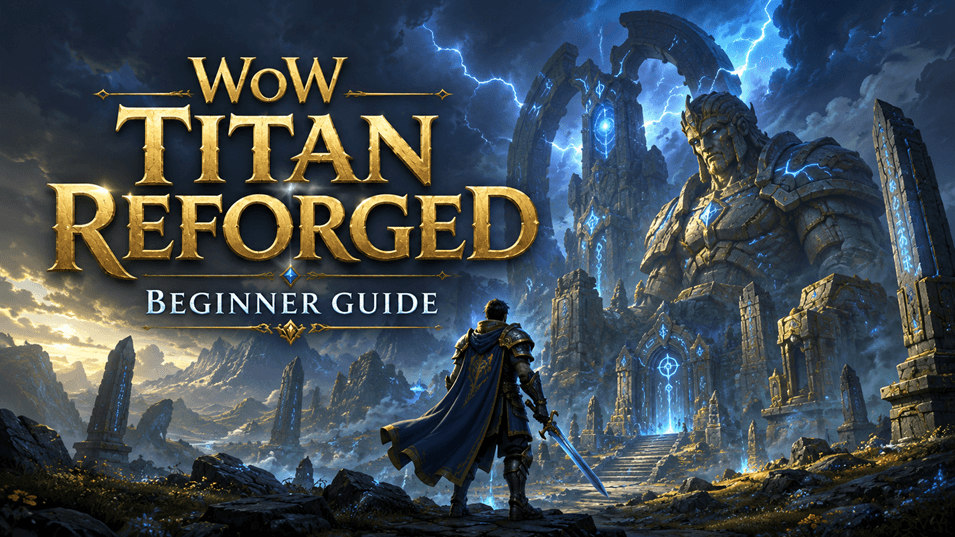
How should a completely new player begin their journey from level 1?
Leveling in Titan Reforged Phase 1 is expected to be a long-term adventure rather than a simple race toward maximum level. Players will need to understand their class, explore zones, collect useful equipment, learn professions, complete early dungeons and gradually prepare for more difficult group content.
This guide is designed for North American and European players who may experience Titan Reforged for the first time. It focuses on beginner fundamentals, early progression decisions and the first journey toward level 80.
Phase 1 Leveling Summary
Choose a class that matches your preferred playstyle.
Do not rush without understanding your abilities.
Complete efficient quest chains instead of random objectives.
Use dungeons as learning opportunities.
Prepare your talents and equipment gradually.
Build good habits before reaching endgame.
Availability Information: The currently confirmed Titan Reforged seasonal content is available for World of Warcraft players in China. Blizzard has not announced an identical Titan Reforged launch for North America or Europe. Therefore, this guide uses confirmed systems as reference while clearly separating future global expectations from official announcements.
Understanding the Phase 1 Leveling Philosophy
Many new players approach Classic-style World of Warcraft with the modern mindset of reaching maximum level as quickly as possible. However, early progression is where players build the foundation that determines their future experience.
During Phase 1, your character is not only gaining levels. You are learning your rotation, discovering class strengths, collecting important abilities and understanding how the world works.
A player who reaches level 80 without understanding their class may struggle in dungeons and raids. A player who takes time during leveling will usually perform better later because they already understand their character.
Leveling Is More Than Experience Points
Experience points are only one part of progression. During the journey from level 1 to 80, players also collect:
New abilities and class mechanics.
Equipment upgrades.
Reputation with different factions.
Profession knowledge.
Dungeon experience.
Understanding of game systems.
Choosing Your First Starting Zone
One of the first decisions new players make is choosing where their adventure begins. The starting zone affects the early experience because each area introduces different enemies, quest styles and environments.
Alliance Beginner Areas
Alliance players traditionally experience peaceful forests, human kingdoms, ancient forests and mysterious regions. These zones are usually designed with clear quest progression and are comfortable for first-time players.
New players should focus on completing connected quest chains instead of traveling randomly across the map. Efficient questing means less walking time and a smoother leveling experience.
Horde Beginner Areas
Horde starting zones often introduce players to harsher environments and stronger survival themes. They provide excellent opportunities to learn combat positioning and resource management.
New Horde players should also avoid abandoning quest chains too quickly. Many early quests are designed to naturally guide players toward the next important region.
Beginner Leveling Tip
Do not leave a zone simply because you reached the recommended level range. Finishing important quest chains often provides useful rewards, story progression and access to future areas.
The Importance of Learning Your Class Early
A common beginner mistake is ignoring class abilities while leveling. Some players only use their strongest damage skill and wait until endgame before learning the complete toolkit.
This approach creates problems because many important abilities are introduced gradually. Crowd control, interrupts, defensive skills and movement abilities all become valuable later.
Learn These Abilities First
Your main damage ability.
Your resource management abilities.
Your emergency defensive skill.
Your interrupt or control ability.
Your movement ability.
Understanding these five categories creates a strong foundation before entering difficult group content.
When to Start Running Dungeons
Dungeons are group-based areas containing stronger enemies, several bosses and more valuable rewards than normal outdoor quests. They are also one of the best places to learn how your class functions with other players.
New players should not feel pressured to enter every dungeon immediately. Before joining a group, make sure you understand your main abilities, have enough bag space and know whether your character will act as a tank, healer or damage dealer.
Understanding the Three Group Roles
A tank protects the group by controlling enemies and keeping their attention. A healer restores health and helps the party survive dangerous damage. A damage dealer defeats enemies while also using interrupts, crowd control and defensive abilities.
Damage dealing is usually the simplest role for a first dungeon because the player has fewer leadership responsibilities. However, new tanks and healers can still succeed when they communicate clearly and tell the group that they are learning.
Why Dungeons Are Valuable While Leveling
They introduce basic group mechanics.
Bosses can provide useful equipment upgrades.
Dungeon quests may award strong experience and items.
Players learn how tanks, healers and damage dealers cooperate.
They provide variety when ordinary questing becomes repetitive.
A dungeon is most efficient when you have several related quests and can complete them during the same run. Repeating one dungeon continuously is not always the best choice, especially when the group takes a long time to form.
How to Spend Talent Points as a Beginner
Talents allow players to customize how their class performs. They can improve damage, healing, defense, resource efficiency or important utility abilities.
New players often copy an advanced talent build without understanding why each point was selected. A guide can provide a useful starting point, but players should still read every talent description.
Choose One Primary Specialization
During early leveling, focus on one clear purpose. A damage-focused specialization usually provides the smoothest solo experience because enemies are defeated more quickly.
Players who want to tank or heal dungeons can still collect appropriate equipment and gradually learn those roles. However, constantly changing talents before understanding the basic class can make progression confusing.
Prioritize Reliable Benefits
Beginner-friendly talents often improve abilities that are used during nearly every fight. Reduced resource costs, stronger primary attacks, improved survivability and shorter cooldowns are usually easier to benefit from than highly situational effects.
As your understanding improves, you can experiment with specialized builds for dungeons, raids or player-versus-player combat.
How to Evaluate Leveling Gear
Equipment increases your character's power, but beginners do not need to replace every item immediately. Quest rewards and dungeon drops normally provide enough upgrades to continue leveling.
Focus on Useful Statistics
Each class benefits from different attributes. Strength, agility, intellect, stamina and secondary statistics can have different values depending on your class and specialization.
Do not equip an item only because its armor value or displayed level is higher. Read the statistics and consider whether they support your main role.
Weapons Often Have the Largest Impact
For many physical damage classes, a stronger weapon can noticeably improve leveling speed. Spellcasters may care more about intellect, spell-related statistics and resource efficiency.
A meaningful weapon upgrade may be worth pursuing, but small temporary upgrades usually do not justify spending most of your gold.
Keep Useful Alternative Items
Hybrid classes such as Paladins, Druids and Shamans may collect equipment for another role. Keep genuinely useful items, but avoid filling every bag with equipment that may never be used.
A Beginner Roadmap From Level 1 to 80
Levels 1-20: Learn the Fundamentals
The first levels should be used to understand movement, combat, quest objectives, vendors and basic class abilities. Stay within connected quest areas and avoid long journeys for a single low-value objective.
This is also a good time to learn gathering professions, purchase larger bags when affordable and organize your action bars.
Levels 20-40: Develop Your Class Identity
Your class gains more important abilities during this period. The basic combat rhythm becomes clearer, and dungeons begin to require better cooperation.
Practice interrupts, defensive cooldowns and crowd control instead of using only damage abilities. These tools become increasingly important later.
Levels 40-60: Improve Efficiency
At this stage, travel distance and equipment quality become more noticeable. Complete quest clusters in the same region rather than moving between distant zones after every objective.
Review your talents and remove outdated items from your bags. Consider whether your chosen professions are still useful for your long-term plan.
Levels 60-70: Enter Expansion Content Carefully
The transition into higher-level expansion zones introduces stronger equipment rewards and more complex quests. Replace older items naturally, but do not assume every reward is automatically better.
Dungeon mechanics may become less forgiving, so communicate with the group and pay attention to dangerous enemy abilities.
Levels 70-80: Prepare for the Endgame
The final leveling range should prepare your character for maximum-level activities. Learn your complete ability toolkit, begin identifying appropriate equipment and understand the basic expectations of your chosen group role.
Do not wait until level 80 to learn interrupts, defensive abilities or resource management. These habits should already feel natural before your first serious endgame dungeon.
Leveling Roadmap Tip
Use level ranges as flexible guidance rather than strict rules. If a zone feels overcrowded, inefficient or too difficult, moving to another appropriate region can improve your experience.
Solo Leveling Versus Group Leveling
Solo leveling gives players complete control over their schedule. It is ideal for learning at your own pace, exploring optional areas and completing quests without waiting for others.
Group leveling can make difficult quests easier and reduce the danger of crowded enemy areas. However, experience and quest progress may become less efficient when the group is too large or members have different objectives.
When to Form a Group
For elite enemies or difficult named targets.
For dungeon quests.
When several players need the same objectives.
When the area is dangerous for your class.
When playing with friends is more enjoyable than maximum efficiency.
A combination of solo questing and occasional group content is usually the most balanced approach for a new player.
Your First-Week Progression Plan
Day 1: Establish Your Character
Complete the starting zone.
Learn your primary combat abilities.
Choose useful professions.
Organize bags and action bars.
Days 2-3: Build Momentum
Follow connected quest chains.
Collect gathering materials during travel.
Run an appropriate early dungeon.
Review new talents and abilities.
Days 4-5: Improve Efficiency
Replace obviously weak equipment.
Sell unnecessary materials and vendor items.
Practice utility abilities in group content.
Move to a new zone when current quests become inefficient.
Days 6-7: Review Your Progress
Check whether your class still feels enjoyable.
Review talents and ability placement.
Plan the next group of leveling zones.
Set realistic goals for the second week.
The first week does not need to end at level 80. A casual player who learns the game and builds good habits is making meaningful progress even at a lower level.
Common Leveling Mistakes to Avoid
Trying to Complete Every Quest
Some quests require excessive travel or provide rewards that are no longer useful. Completing every objective is unnecessary unless you enjoy the story or want a specific reward.
Buying Too Many Temporary Upgrades
Equipment is replaced frequently while leveling. Spending large amounts on small upgrades can leave you unable to afford training, bags or other important expenses.
Ignoring Defensive Abilities
New players often focus entirely on damage. Defensive cooldowns, healing abilities, movement tools and crowd control can prevent deaths and reduce recovery time.
Remaining in an Inefficient Zone
If enemies are too difficult, quests are too far apart or the area is overcrowded, another zone may provide a smoother experience.
Copying an Advanced Speed-Leveling Route
Routes created for experienced players may assume perfect map knowledge, optimized professions, specific equipment and practiced movement. Beginners should prioritize a reliable route they understand.
Preparing for a Possible US or EU Launch
Blizzard has not confirmed that the Titan Reforged seasonal model currently operating in China will be released unchanged in North America or Europe.
A future Western version could have different experience rates, class tuning, racial abilities, raid schedules, starter systems or progression requirements.
For that reason, international players should focus on universal World of Warcraft skills rather than memorizing every China-specific number. Class knowledge, quest efficiency, dungeon awareness, inventory management and teamwork will remain useful even if individual rules change.
Why Gold Still Matters During Early Leveling
Gold should not become the main focus of a beginner leveling journey, but it still supports important early progression. Players need it for class training, repairs, bags, transportation, profession development, consumables and occasional meaningful equipment upgrades.
Saving a reasonable reserve can make the journey smoother and prevent basic expenses from interrupting progress. Avoid spending everything on equipment that will be replaced after only a few levels.
LootWoW has served online game communities for more than ten years and has experience supporting players across multiple World of Warcraft versions and regional environments. Players who want additional assistance with early progression can visit LootWoW to Buy WoW Titan Reforged Classic Gold.
Final Thoughts
The best WoW Titan Reforged Phase 1 leveling route is not necessarily the route that reaches level 80 in the fewest hours. For a new player, the best route is the one that teaches the class, introduces group content and creates a strong foundation for future progression.
Begin with connected starter-zone quests, learn important abilities as they become available, enter dungeons when you feel prepared and evaluate equipment based on usefulness rather than appearance alone.
Use the journey from level 1 to 80 to build good habits. Practice interrupts, defensives, movement and group communication before reaching difficult endgame content.
A beginner who understands their character will be better prepared for Phase 1 than a player who reaches maximum level quickly without learning how the game works.