










MapleStory Classic World Party Leveling Guide: When Group Training Beats Solo Grinding
Source:NEXON

MapleStory Classic World Party Leveling Guide: When Group Training Beats Solo Grinding
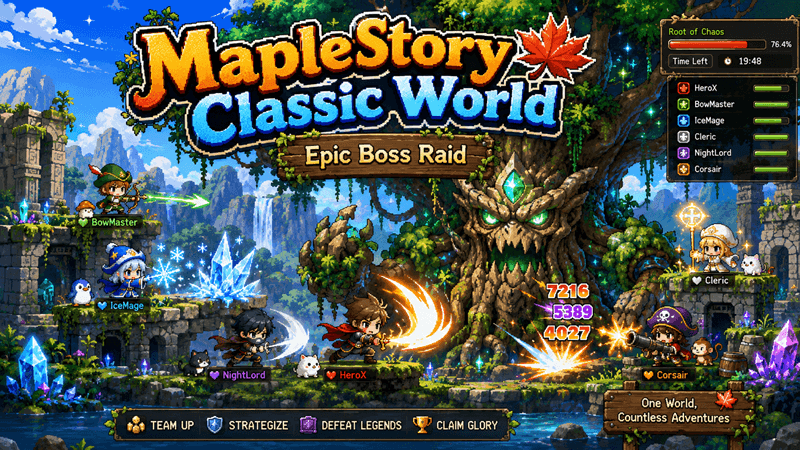
Solo grinding is easy to measure. You choose a map, defeat monsters and watch your experience increase. Party training is more complicated because another player can either improve your efficiency dramatically or quietly make the same map worse.
A good party can cover more platforms, reduce empty movement, maintain pressure across a large map and make difficult monsters easier to handle. A poorly organized group can create the opposite result: players competing for the same spawns, waiting for each other, using more supplies and gaining less useful progress than they would alone.
The important question is therefore not simply whether party play is good. The real question is whether a specific party improves the complete training cycle for your character.
This MapleStory Classic World party leveling guide explains how to compare solo and group training, choose maps that actually benefit from multiple players, organize positions and evaluate EXP, drops, potion costs and downtime together.
Party Leveling: Quick Answer
Party when: the map is large enough for several players, monster coverage improves and each member has something productive to do.
Solo when: you already clear the map efficiently, another player would compete for your monsters or coordination creates more downtime than value.
Best party maps: usually have enough spawn coverage, multiple useful platforms and room for players to divide responsibilities.
Always compare: EXP gained, potion use, useful drops and idle time instead of assuming a party is automatically faster.
Why Party Training Can Be So Powerful
The strongest advantage of a party is not simply having more damage. It is the ability to reduce wasted space and wasted time.
Large maps can be inefficient for one player because monsters spawn across several platforms. A solo character may spend significant time climbing, jumping or moving between areas instead of attacking.
With several players, those same platforms can be divided. Instead of one character repeatedly crossing the entire map, each party member can remain near a productive section and keep monsters under pressure.
Party play can also make stronger enemies practical earlier. A monster that feels inefficient alone may become manageable when damage and map coverage are shared.
The Real Party Advantage
A good party does not merely add players. It converts time that would have been spent moving, waiting or recovering into additional productive combat.
When Solo Grinding Is Still Better
Party training is not automatically superior. If you already clear a compact map quickly, adding another player may simply divide the same monsters between more people.
This is especially important on maps where most useful spawns are concentrated in one small area. Two characters attacking the same limited group can reduce the number of useful kills available to each player.
Coordination also has a cost. Waiting for party members to arrive, restock, change channels, organize positions or return after leaving can reduce active training time.
A strong solo map is difficult to improve when your character already moves through it naturally and kills monsters as quickly as they appear.
What Makes a Good Party Training Map?
Multiple Productive Areas
The map should have enough useful space that several players can attack without constantly competing for the same monsters.
Reliable Spawn Coverage
Players should be able to maintain pressure across several sections rather than spending long periods waiting for monsters.
Clear Player Positions
Good party maps often allow members to divide platforms or regions naturally instead of repeatedly crossing each other's routes.
Appropriate Monster Difficulty
Monsters should be strong enough that multiple players add value without being so difficult that potion usage and kill time become excessive.
Divide the Map Before You Start
One of the simplest improvements to party efficiency is deciding where everyone should train before the session begins.
Without positions, players naturally chase visible monsters. This often causes two or three members to move toward the same spawn while another section of the map remains untouched.
Assigning zones reduces this overlap. One player might control the lower platforms while another stays higher. A third can cover a side section or move between areas where respawns create temporary gaps.
The exact layout matters less than the principle: every player should know where their next useful monster is likely to appear.
Advanced Party Tip
Do not divide a map into equal physical sizes. Divide it according to workload. One small platform with dense spawns may require as much attention as several larger but quieter platforms.
Class Differences Matter More in a Party
Different classes interact with map layouts in different ways. A party becomes stronger when those differences are used rather than ignored.
A ranged character may be comfortable covering long platforms where monsters can be attacked without constant repositioning. A close-range character may perform better in compact sections where enemies naturally gather.
Mobility also changes the answer. Characters that move efficiently between platforms may be better suited to flexible or rotating positions, while slower characters can remain in areas with consistent local spawns.
The strongest party arrangement is therefore not necessarily putting every player in an equal role. It is giving each character the section where their strengths create the most value.
Compare EXP per Hour, Not EXP per Kill
Party training can make individual experience numbers more difficult to interpret. One monster may appear less rewarding than expected, but the group may be defeating far more monsters over the same period.
This is why individual kill rewards should not be the only comparison.
Measure the complete session. Record your starting EXP, train for a fixed amount of time and then compare the result with a similar solo session.
Step 1: Record your starting EXP.
Step 2: Train with the party for approximately twenty minutes.
Step 3: Record EXP gained and important consumables used.
Step 4: Test a realistic solo map for a similar amount of active time.
Step 5: Compare the complete results.
Potion Costs Can Change the Winner
A party may increase EXP while also changing how much HP and MP recovery your character consumes.
Sometimes group training reduces costs. Monsters die faster, incoming damage drops and players can remain in safer positions.
In other situations, a party moves to harder monsters because the group can technically defeat them. EXP increases, but so does recovery pressure.
Faster leveling can justify spending more Mesos, but the tradeoff should be intentional. If potion costs double while EXP improves only slightly, the harder party location may not be as efficient as it first appears.
Useful Drops Are Part of Party Efficiency
Experience is important, but leveling also creates an economy around your character.
Equipment, materials, consumables and other useful drops can reduce the effective cost of training or become additional Mesos later.
A party that defeats more monsters per hour may create more total drop opportunities even if those drops are distributed among several players.
Before a long session, it is useful to agree on how valuable or unusual drops will be handled. Confusion over loot can interrupt training and create unnecessary conflict.
Keep the Loot Rules Simple
The best loot system is one everyone understands before something valuable appears. Complicated negotiations during training reduce the efficiency the party was supposed to create.
Party Size Has Diminishing Returns
Adding one player to a map can produce a major improvement. Adding another may help less. Eventually, additional players can begin reducing individual productivity.
The reason is simple: maps contain limited monsters.
Once every useful platform is already being cleared efficiently, another player has nowhere productive to contribute. They may begin overlapping existing routes or waiting for respawns.
The ideal party size therefore depends on the map. A compact location may work best with one or two players, while a much larger map may benefit from additional coverage.
Do Not Ignore Travel and Setup Time
Party efficiency begins before the first monster is defeated.
If four players spend fifteen minutes organizing, traveling and waiting for someone to restock before a thirty-minute session, the setup cost is substantial.
Longer sessions can justify more preparation because the setup cost is spread across more active training time. Very short sessions require faster organization.
Before leaving town, confirm the destination, prepare enough supplies and clear enough inventory space to avoid an immediate return trip.
When You Should Leave a Party
A party that was efficient twenty levels ago, or even twenty minutes ago, does not need to remain efficient forever.
Players may level at different speeds, change equipment or begin needing different monsters. A map can become too easy for one member while remaining appropriate for another.
Leave or reorganize when your contribution becomes unclear, your EXP rate falls below a realistic solo alternative or waiting and overlap begin consuming too much time.
A Party Is a Tool, Not a Commitment
Good players change strategies when the numbers change. Staying in an inefficient group because it worked earlier can waste more time than rebuilding a better route.
Common Party Leveling Mistakes
Everyone Training in the Same Area
Several players chasing the same monsters removes the main advantage of map coverage.
Choosing a Map That Is Too Small
A strong solo map can become weak when multiple players compete for limited spawns.
Assuming Harder Monsters Are Automatically Better
A party may technically defeat stronger monsters while still producing poor EXP and excessive potion costs.
Ignoring Class Strengths
Giving every player an identical role can waste differences in range, mobility and combat style.
Measuring Only EXP
Consumable use, useful drops, setup time and travel all contribute to the complete value of a session.
Frequently Asked Questions
Is Party Training Always Faster Than Solo Grinding?
No. Party training is strongest when several players improve map coverage or make difficult monsters meaningfully more efficient. A compact map that you already clear well may remain better solo.
How Many Players Should Be in a Training Party?
There is no universal number. Add players while each new member can cover useful monsters or improve the training cycle. Once players begin waiting or overlapping heavily, the group may be too large for that map.
Should Party Members Be the Same Level?
Similar progression can make coordination easier, but the more important question is whether everyone can contribute productively to the same training location.
Are Large Maps Always Better for Parties?
Not automatically. A large map still needs useful spawn coverage and practical movement. Empty space does not create efficiency simply because more players can fit inside it.
Should I Spend More Mesos to Train With a Stronger Party?
Spending more can be reasonable when the additional potion or supply cost produces a meaningful increase in progression. Compare the real result instead of assuming that higher expense always means faster leveling.
Final Rule: Party Only When the Party Creates More Progress
Party training in MapleStory Classic World can be extremely efficient, but the benefit does not come from the party label itself.
The benefit comes from better map coverage, reduced downtime, useful class combinations and the ability to maintain a stronger training cycle than one player could create alone.
Divide the map intelligently. Compare complete sessions. Watch potion costs and loot value. Change positions when one area becomes overloaded, and do not be afraid to return to solo training when your character has a better individual option.
The best leveling method is always the one that turns the greatest percentage of your available playtime into useful progression.
Players who want to plan their currency needs alongside leveling can also review the current MapleStory Classic World Mesos page on LootWoW.