











MapleStory Classic World Magician Leveling Guide: MP Management, Training & Gear
Source:NEXON

MapleStory Classic World Magician Leveling Guide: MP Management, Training & Gear
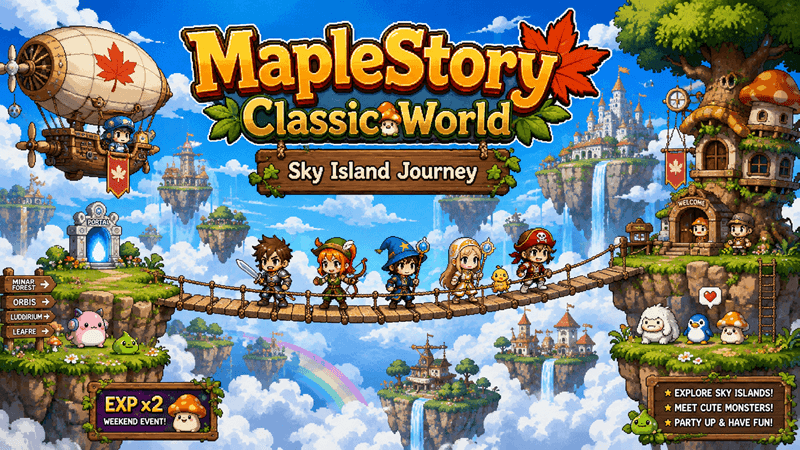
Magician is one of the most recognizable ways to experience MapleStory Classic World. Ranged spellcasting, a large reliance on MP and the ability to approach monsters differently from physical classes give the job a distinctive leveling rhythm from the moment its core abilities begin to develop.
That does not necessarily make Magician an effortless leveling choice. A character can defeat monsters quickly and still progress inefficiently if every training session consumes an excessive number of MP potions. The strongest-looking spell is not always the most economical spell, and the monster with the highest EXP value is not always the best monster for a Mage to train on.
The real goal is balance. Good Magician progression combines reliable damage, favorable map layouts, sustainable MP usage, appropriate equipment and enough Mesos to keep the character training without constant interruptions. This guide focuses on those fundamentals rather than presenting one temporary test build as a permanent answer.
Magician Leveling Priorities
01. Choose monsters that can be defeated consistently without excessive MP spending.
02. Prefer maps that allow continuous ranged attacks with limited climbing and repositioning.
03. Treat MP potions as part of your leveling cost, not as an unlimited resource.
04. Upgrade equipment when it creates a meaningful improvement in kill speed or resource efficiency.
05. Recheck skills and progression rules in the live Classic World version instead of copying an old MapleStory build blindly.
Version note: Global MapleStory Classic World is still being tested and adjusted. Skill values, progression balance and other details can change. Use current in-game descriptions and official Nexon Classic World information when exact numbers matter.
What Makes Magician Leveling Different?
Physical classes can often judge a training session mainly by how quickly they reach enemies and how much damage they deal. Magicians have another variable to consider: the amount of MP required to produce that damage.
Imagine two training locations. The first gives slightly more EXP per monster but requires repeated high-cost spell use. The second contains slightly weaker monsters that die quickly to a cheaper and more repeatable attack pattern. Even if the first location looks better on paper, the second can provide stronger long-term progression because it reduces potion use and downtime.
This is why Magician players should think about EXP efficiency and Meso efficiency at the same time. A leveling route that continuously drains your wallet becomes difficult to maintain even when the experience rate looks attractive.
Early Magician Progression: Build Good Habits First
Early levels are the best time to learn the relationship between damage and resource consumption. Do not use a more expensive ability automatically simply because it produces the largest number on screen.
When a weaker monster can already be defeated comfortably, additional damage may provide almost no practical benefit. Spending more MP to overkill an enemy is usually less efficient than using enough power to defeat it consistently.
Players should also become comfortable attacking from advantageous positions. Ranged spellcasting is valuable because it can reduce incoming damage and unnecessary movement. A Magician who constantly stands beside monsters gives away much of that advantage.
Beginner Rule
Do not ask only, “Which spell deals the most damage?” Ask, “Which spell defeats this monster efficiently enough that I can repeat the same training cycle for an entire session?”
MP Is Part of Your Leveling Budget
MP is a combat resource, but MP recovery is also an economic expense. Every potion consumed during grinding represents currency that could otherwise be saved for equipment, travel or future progression.
This does not mean you should avoid using spells. A Magician exists to cast. The objective is to make sure the amount of MP spent produces enough experience, drops and progression to justify the cost.
If your inventory begins every training session with a large stack of MP potions and returns nearly empty after only a short period, review the monsters you are fighting. You may be using unnecessarily expensive abilities, fighting targets that take too many casts or training in an area that forces too much movement and repeated spell use.
Measure MP Cost per Kill, Not Just MP Cost per Spell
Comparing individual spell costs can be misleading. A cheaper spell that requires four casts to defeat a monster may consume more total MP than a stronger spell that requires only two casts.
The useful measurement is the approximate resource cost of completing the kill. You do not need a spreadsheet for every monster. Simply notice how many casts are normally required and how quickly your potion supply declines.
Once you begin thinking this way, training decisions become much clearer. A monster that appears profitable because of its high experience reward may become unattractive when every kill consumes significantly more resources than an easier alternative.
What Makes a Good Magician Training Map?
The best Magician maps are not defined by one monster name. Map geometry matters enormously. A location that lets you attack from safe and repeatable positions can outperform a theoretically stronger map that requires constant climbing.
Compact Platforms
Platforms that keep monsters within a predictable attack area reduce movement between casts and help maintain a consistent rhythm.
Safe Ranged Positions
Locations where enemies can be attacked before reaching you can reduce HP potion use and interruptions.
Low Travel Time
Every ladder climb and long walk between spawn groups is time during which your character gains no experience.
Sustainable Monster Strength
Monsters should be strong enough to provide useful progression but weak enough that normal kills do not consume excessive spells and potions.
Popular Maps Are Not Always the Best Maps
Launch guides naturally cause players to concentrate on famous training areas. If several players are already competing for the same monsters, the theoretical efficiency of that location no longer matters.
Magicians should maintain backup options. Learn at least two usable maps for an important leveling range. An alternative with slightly weaker monsters can produce better real EXP when you have the entire map available.
Repeated channel switching also creates hidden downtime. Spending fifteen minutes looking for the perfect map can easily erase the small efficiency advantage that made the location attractive in the first place.
Do Not Copy an Old Magician Build Without Checking It
Classic MapleStory has existed in different regions and versions over many years. That creates a large amount of historical information online, but historical does not automatically mean correct for Global MapleStory Classic World.
A skill order may have been optimal because of values, monsters or equipment available in a different release. Classic World can receive its own tuning and development decisions. Exact Skill Point recommendations should therefore be checked against the current client.
You can still learn from historical guides. Use them to understand the purpose of skills and the logic behind a build, but verify the numbers before following the exact order.
How to Think About Skill Points
A useful leveling build normally needs more than raw damage. Skills can improve survival, resource efficiency, mobility or the reliability of your normal combat sequence.
When deciding where to spend a new Skill Point, ask what currently limits your character. If monsters already die comfortably, additional damage may not improve your experience as much as a passive or utility improvement that reduces downtime.
Avoid spending points randomly simply because several skills look interesting. Skill resets may have costs or restrictions depending on the live version, so an intentional plan is safer than experimenting without understanding the consequences.
Magician Equipment: Upgrade for Results
Magician equipment should support the way the character actually levels. An upgrade is valuable when it meaningfully improves spell performance, survivability or access to equipment that helps the next stage of progression.
Do not replace every equipment slot automatically when a higher-level piece becomes available. This is particularly important when your currency is limited. Several minor upgrades can consume more Mesos than one important improvement that noticeably changes your training speed.
Keep enough money after an equipment purchase to continue buying normal supplies. A stronger character that can no longer afford a proper training session has not actually improved its overall progression very much.
When Is a Weapon Upgrade Worth Buying?
Think in terms of casts required per monster. If an upgrade allows you to defeat a common training target with one fewer spell, it can create a meaningful improvement because the benefit repeats across an entire session.
If the old equipment and new equipment both defeat the target in exactly the same number of casts, the improvement may be less urgent. Saving for a stronger future upgrade can be the better decision.
Damage consistency matters too. An upgrade that makes a two-cast kill reliable instead of only occasionally possible can still have real value even when the maximum damage increase appears modest.
HP Management Still Matters
Being a ranged spellcaster does not make HP irrelevant. Poor positioning, unexpected monster contact and aggressive pulls can quickly turn a comfortable training session into a dangerous one.
Learn the safe parts of each map. Attack from positions where monsters have difficulty reaching you immediately and move before several enemies surround the character.
Dying is one of the least efficient outcomes possible. Even when the exact penalty depends on the live game rules, returning to the map and rebuilding the training rhythm always costs time.
Solo Training vs. Party Training for Magicians
Magicians can work well in both solo and party environments. Solo training gives complete control over the map and allows you to choose monsters specifically around your damage and MP efficiency.
Party training becomes attractive on larger maps where one character cannot efficiently reach every spawn. A Magician can control a ranged-friendly platform while another job handles an area that would otherwise require repeated travel.
Do not join a party simply because a party is available. Compare your real progress. If the group leaves too few monsters for your section, solo training may be faster.
Build Your Potion Supply Around the Session
Returning to town every few minutes destroys leveling momentum. Before traveling to a training area, estimate how long you want to remain there and carry enough recovery items to support that session.
At the same time, do not spend nearly your entire wallet on an unnecessarily large potion stock. Keep enough currency available for transportation, equipment opportunities and unexpected needs.
After several sessions you should know approximately how much MP recovery your normal training route requires. That knowledge makes planning much easier.
Common Magician Leveling Mistakes
Fighting Monsters That Are Too Strong
Higher EXP does not compensate for slow kills, excessive MP consumption and frequent HP potion use when the complete session becomes less efficient.
Using Maximum Damage on Every Target
When a cheaper attack already defeats an easy monster efficiently, additional spell cost may produce no meaningful leveling benefit.
Ignoring MP Costs
EXP per hour is only part of progression. A route that empties your Meso balance faster than you can replace it becomes difficult to sustain.
Copying a Historical Build Exactly
Use old guides for ideas, but verify current Classic World skill behavior and values before spending points.
Upgrading Every Gear Slot
Spend where an upgrade actually changes character performance instead of replacing equipment only because a new level requirement becomes available.
A Simple Magician Training Check
When deciding whether to remain on a map, evaluate the complete training session instead of relying on first impressions.
Damage: Can you defeat monsters consistently without an excessive number of casts?
MP: Is potion consumption reasonable compared with the experience and drops you receive?
Movement: Are you spending most of your time casting, or most of your time climbing and traveling?
Safety: Can you maintain ranged positioning without repeatedly taking unnecessary damage?
Competition: Are enough monsters available to support continuous training?
The Best Magician Is a Sustainable Magician
Magician progression becomes much easier when you stop treating MP as something that exists independently from the rest of the character. Damage, potion usage, equipment and training-map selection are parts of the same system.
A strong Magician does not necessarily train on the highest-level monster available. The better player chooses targets that can be defeated reliably, finds positions that reduce unnecessary movement and uses enough spell power to maintain strong progress without wasting resources.
As Global MapleStory Classic World continues to develop, exact skill priorities and optimal maps may change. The fundamentals will remain useful: understand why you are spending each resource, measure real training performance and adjust your route whenever another option produces better progression. That approach will take a Magician much further than blindly copying a fixed leveling list.