










AION 2 Launch Market Guide: How Beginners Should Read Early Prices and Protect Kinah in Phase 1
Source:nc

AION 2 Launch Market Guide: How Beginners Should Read Early Prices and Protect Kinah in Phase 1
AION 2 Global Launch Market Context
AION 2 Advance Access begins on September 30, 2026 for eligible Founder’s Pack players, followed by the full global PC launch on October 5. That five-day transition matters economically because the number of active players, available resources, market knowledge, and demand can change significantly once the wider player population arrives.
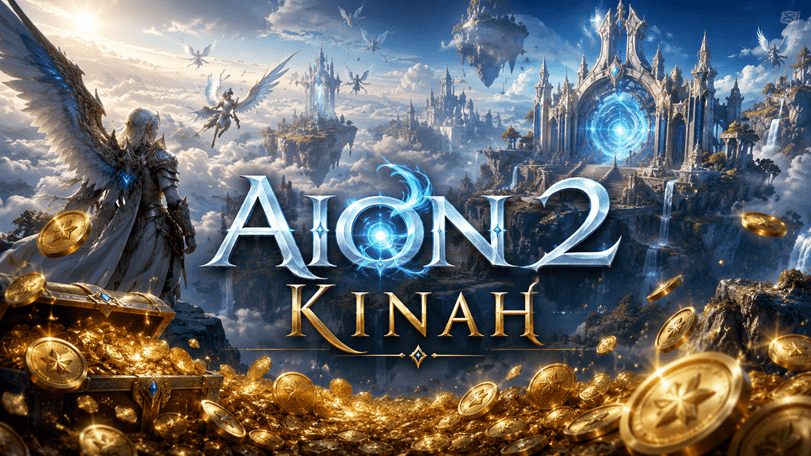
A new MMORPG economy rarely begins in a balanced state. During the opening hours of AION 2, players will be discovering progression systems while simultaneously trying to understand what materials, equipment, and other tradeable resources are actually worth.
That creates one of the most interesting periods of the entire game economy. Prices may move quickly, information will be incomplete, and two players can look at the same item and assign completely different values to it.
For beginners, the important skill is not predicting every price correctly. It is learning how to recognize uncertainty and avoid making expensive decisions before the market has enough information.
This AION 2 launch market guide focuses on price discovery, supply and demand, liquidity, launch timing, and Kinah protection. Exact prices cannot be known before the live global economy develops, so the goal is to provide a decision framework that remains useful even when individual item values change.
1. Do Not Treat The First Market Price As The Real Price
One of the first mistakes beginners make in a new MMORPG is assuming that the first visible price represents fair value.
Early markets usually have limited supply. If only a few players have obtained an item, sellers may list it at extremely high prices simply because there is little competition.
That does not automatically mean buyers are willing to pay those prices.
There is an important difference between a listed price and a price at which an item can repeatedly sell.
A high listing proves that someone wants a high price. It does not prove that the market agrees.
Beginners should therefore observe multiple listings and, where possible, actual market behavior before committing large amounts of Kinah.
2. Advance Access Prices May Not Represent October 5 Prices
AION 2 has an unusual launch window that economy-focused players should pay attention to. Founder’s Pack Advance Access starts five days before the full global launch.
During Advance Access, the economy will be created by a smaller group of players who are often more motivated, more prepared, or willing to spend more time progressing early.
When the larger October 5 population enters the game, several things can happen at the same time:
More players begin gathering resources.
More players begin demanding equipment and materials.
More sellers enter the market.
More Kinah begins circulating.
More information about efficient progression becomes public.
Because both supply and demand can expand dramatically, beginners should not automatically assume that an Advance Access price will remain unchanged after the full launch.
3. Learn The Difference Between Scarcity And Real Demand
An item can be expensive for two very different reasons.
The first is real demand. Many players genuinely need the resource for progression, crafting, equipment, or another important system.
The second is temporary scarcity. Very few players have reached the content that produces the item, so supply is artificially low.
These situations can look identical during the opening days, but they create different future price behavior.
If demand remains strong while supply stays difficult, an item may continue holding value. If the main problem is simply that few players have reached its source, the price may fall quickly when the wider population catches up.
Before buying an expensive resource, ask why it is expensive instead of only looking at the number.
4. Supply Usually Changes Faster Than Beginners Expect
The first seller of a useful material may face almost no competition. Several days later, hundreds or thousands of players may understand where the same material comes from.
This is why early MMORPG prices can collapse even when the item itself has not changed.
The supply curve changed.
Beginners should be particularly careful with items that appear expensive because very few players currently have access to them.
Ask yourself:
Will more players reach this content tomorrow?
Can this resource be farmed repeatedly?
Is the current supply low because the game is new?
Could an efficient farming method increase supply?
If the answer to several of these questions is yes, paying a large scarcity premium can be risky.
5. High Demand Does Not Always Mean A Good Investment
Another launch mistake is buying something simply because everyone appears to want it.
Popular resources can have strong demand, but strong demand attracts suppliers. When players discover that an item sells well, more of them may begin farming or producing it.
This can rapidly change the balance between buyers and sellers.
Instead of asking whether an item is popular, ask whether future supply can increase faster than future demand.
That question is much more useful for understanding potential price direction.
6. Liquidity Matters More Than An Impressive Price
A valuable item is only economically useful when someone actually wants to buy it.
Beginners sometimes discover a rare item, see another player listing it at a high price, and immediately calculate their wealth using that number.
But an item that takes days to sell is very different from an item that sells consistently.
Liquidity describes how easily an asset can be converted into usable Kinah without giving up too much value.
Why Liquidity Matters In Phase 1
A slightly lower-value resource that sells consistently can be more useful to a beginner than a theoretically expensive item with almost no buyers.
7. Avoid Spending Most Of Your Kinah On One Market Bet
Launch economies can reward speculation, but they can also punish it quickly.
Buying a large quantity of one material because you expect the price to rise creates concentration risk. If your prediction is wrong, much of your available Kinah becomes trapped in an asset that is losing value.
For beginners, flexibility is usually more valuable than maximizing one speculative opportunity.
Keep enough Kinah available for:
Character progression.
Unexpected equipment needs.
Useful materials.
New systems discovered after launch.
Better opportunities that appear later.
A market opportunity should improve your position, not remove your ability to continue playing normally.
8. Watch Replacement Risk Before Buying Expensive Gear
Equipment markets are especially dangerous for beginners because visible power upgrades can create emotional buying decisions.
Before paying a large amount of Kinah for an item, consider how long you realistically expect to use it.
An item can be powerful and still be a poor purchase if normal progression replaces it quickly.
Estimate value based on the useful life of the item rather than only the immediate stat increase.
The closer you are to a meaningful progression transition, the more careful you should be about paying launch premiums for temporary equipment.
9. Learn From Price Direction Instead Of Individual Prices
A single price snapshot tells you very little.
What matters more is the direction of the market.
For example, imagine a material is listed lower every time you check it. That pattern may indicate that supply is entering faster than demand.
The opposite can happen when an item repeatedly disappears and replacement listings become more expensive.
Beginners do not need complicated spreadsheets. Simply recording a few observations can improve decision-making dramatically.
Price when you first noticed the item.
Approximate amount of available supply.
Price several hours or one day later.
Whether listings appear to move quickly.
10. October 5 Could Change The Market Very Quickly
The transition from Advance Access to the full October 5 global release may become one of the most important early economic moments.
A much larger population entering the game means more consumers, but it also means more gatherers, farmers, crafters, and sellers.
Different categories of items may react differently.
Basic progression resources could experience heavy demand from new characters. At the same time, resources that were scarce during Advance Access may receive much more supply.
The safest strategy is not trying to predict every movement. It is recognizing that October 5 represents a major change in market participation and avoiding decisions that require prices to remain exactly where they were during Advance Access.
11. A Simple Launch Market Decision System
When you find an expensive item or material during Phase 1, use five questions before acting:
Why does this item currently have value?
Is demand based on real progression needs or temporary excitement?
Can supply increase significantly in the next several days?
How quickly could I resell or replace it?
Would this decision use too much of my available Kinah?
If you cannot answer these questions confidently, reducing the size of the decision is often better than making a large speculative commitment.
12. Three Market Mistakes Beginners Should Avoid
Three behaviors create unnecessary risk during almost every new MMORPG economy.
Buying because of fear of missing out:A rapidly rising price does not guarantee that it will continue rising.
Holding because of the original purchase price:The market does not care what you paid. Reevaluate based on current conditions.
Copying another player's strategy without understanding it:Different players have different Kinah reserves, progression goals, and risk tolerance.
AION 2 Launch Market FAQ
Will AION 2 prices be highest during Advance Access?
Not necessarily. Some items may be expensive because supply is limited, while others may gain stronger demand after the full global population enters on October 5. Different item categories can behave differently.
Should beginners buy expensive items during the first few days?
Only when the purchase solves a meaningful progression problem and the cost is reasonable relative to your available Kinah. Early prices can change quickly.
Is a rare item automatically valuable?
No. Rarity creates limited supply, but sustainable value also requires demand. An extremely rare item with few interested buyers may have poor liquidity.
Should I save all my Kinah until prices become stable?
Not necessarily. Useful spending can improve progression. The goal is keeping enough flexibility while avoiding unnecessary launch premiums.
When will the AION 2 economy become stable?
There is no exact date. Stability develops gradually as more players understand item sources, progression requirements, supply patterns, and market demand.
Final Thoughts
The first AION 2 market will probably be defined by uncertainty rather than efficiency. That is normal for a new MMORPG.
Advance Access players beginning on September 30 will start discovering prices before the full October 5 population arrives. Once the global launch opens to everyone, both supply and demand can change rapidly.
Beginners do not need to predict these movements perfectly. A better strategy is protecting Kinah, observing price direction, understanding why resources have value, and avoiding large decisions based on temporary scarcity.
The players who understand the difference between price, value, demand, scarcity, and liquidity will be better prepared to navigate AION 2 Phase 1.
Lootwow AION 2 Economy Resources
Lootwow continues to cover AION 2 launch markets, Kinah management, farming, resource planning, equipment budgets, and Phase 1 economy strategies for global players.
Players researching additional AION 2 currency options can review Buy Aion 2 Kinah Cheapinformation while comparing it with ordinary in-game earning and progression methods.