












AION 2 Combat Guide for Global Beginners: Chain Skills, Positioning, and First-Fight Fundamentals
Source:nc

AION 2 Combat Guide for Global Beginners: Chain Skills, Positioning, and First-Fight Fundamentals
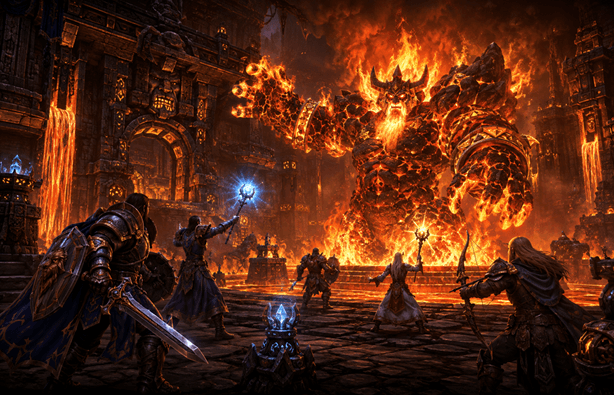
AION 2 is not presenting combat as a game of standing still and repeating a memorized rotation. The current global Steam page describes every fight as a decision shaped by precision, timing, positioning, chained skills, class customization, and adaptation. For a beginner, that means the first combat skill to learn is not maximum damage. It is how to read what the fight is asking you to do.
For North American and global-launch players, that distinction matters because many available videos come from Korea or Taiwan, where AION 2 has already received later balance updates, additional Stigma skills, new mechanics, and post-launch class changes. Those versions can demonstrate broad ideas, but they should not be used to claim that a specific rotation, defensive timing, class ranking, or skill value will be identical in global Phase 1.
This guide focuses on combat literacy: how chain skills fit together, why positioning matters, what defensive decisions look like, how to choose targets, how class identity affects your approach, and which early mistakes make fights unnecessarily difficult. It is designed to remain useful even if individual numbers change before global release.
Confirmed Global Combat Direction
Steam says precision, timing, and positioning shape every battle, and explicitly highlights chain skills and class customization. The global page also presents vertical combat and aerial movement as defining features. NC introduced eight core playable classes during an earlier content reveal, but final global Phase 1 roster and tuning should be confirmed in launch notes.
Regional-version boundary: NC's March 2026 regional update added a broad class rebalance, new Stigma skills, and new defensive mechanics. That shows how the live regional game has evolved, but those details should not be treated as guaranteed North American Phase 1 systems until global sources confirm them.
1. Start by Reading the Fight, Not Your Rotation
Beginners often watch the skill bar because they are worried about pressing the correct sequence. That makes them late to important events. Your attention should alternate between the enemy, the ground or airspace around you, your current target, and only then your cooldowns.
Look for cast animations, telegraphs, directional attacks, sudden target switches, additional enemies, arena hazards, and changes in altitude. If an enemy raises a weapon or begins a long cast, ask what response the game expects. It may be movement, interruption, a defensive skill, or simply stopping your attack long enough to reposition.
The global Steam description says every fight is a decision rather than a rotation. Treat that literally. A technically perfect damage sequence performed inside a lethal attack is a bad sequence. The correct action is the one that keeps you effective after the mechanic resolves.
2. What Chain Skills Mean for a New Player
Chain skills are one of the clearest confirmed elements of AION 2's global combat identity. A chain means that using one ability can lead naturally into another, creating a sequence with its own timing and tactical purpose. The key beginner mistake is assuming every available continuation must be pressed immediately.
Instead, learn what each part of the chain contributes. One step may close distance, another may deal strong damage, another may apply control, and another may be best saved until the enemy is vulnerable. If the target moves out of range or a dangerous telegraph appears, break the sequence and reposition.
Practice chains on ordinary enemies until you can recognize them without staring at the interface. Your goal is to understand the shape of the sequence: how long it keeps you committed, whether it moves your character, and which step is most expensive to cancel.
Do not import a later regional best rotation before you know the global values. Balance patches can change cooldowns, damage coefficients, Stigma options, and even the purpose of individual abilities. Learn the relationship between skills first; numerical optimization comes later.
3. Positioning Is Part of Your Damage
Players sometimes treat positioning as a healer or tank responsibility. In AION 2 it is everyone's responsibility. The global page repeatedly emphasizes positioning and three-dimensional combat, so location is part of performance rather than an afterthought.
A good position gives you access to the target, enough space to avoid danger, a readable camera angle, and a route back toward allies. A bad position may produce slightly more damage for a few seconds while making the next mechanic difficult or impossible to avoid.
Melee players should avoid trapping themselves against walls or beneath oversized enemies. Ranged players should not stand at the absolute edge of their reach if one backward step will break range or line of sight. Everyone should avoid unnecessary vertical separation from the group.
Before committing to a long attack, identify one safe direction. That single habit makes reactive movement much easier because you do not have to invent an escape route after danger appears.
4. Vertical Awareness Changes Familiar MMO Habits
AION 2 is built around a world where the sky is part of the battlefield. That changes how beginners should think about range. An enemy may be horizontally close while still being awkward to reach because of altitude. An ally can appear nearby on the minimap while being separated by a ledge or vertical structure.
During combat, keep yourself within a readable vertical band unless the encounter requires separation. Extreme height differences can make targeting, healing, camera tracking, and group movement harder. Small altitude adjustments are easier to control than dramatic climbs.
Use the camera to understand depth. When an enemy leaves the center of the screen, do not immediately chase in a straight line. Reorient first, identify terrain, and then move. Blind pursuit is especially dangerous in PvP or near cliffs.
5. Learn the Difference Between Movement and Panic
Good movement is deliberate. Panic movement is continuous motion without a purpose. Running in circles, changing direction repeatedly, or flying far away from the group may feel safe, but it can destroy your own attack opportunities and make allies struggle to follow you.
Move enough to solve the problem, then stabilize. If an area attack appears under you, leave its boundary and stop. If a directional strike is coming, move to the safe side rather than crossing the whole arena. If you need to create distance, choose a line that keeps the target visible.
The more precise your movement becomes, the less time you lose. That is why positioning can increase effective damage even when it does not change a single skill coefficient.
6. Understand Your Class Identity Before Your Build
NC's earlier core-content reveal introduced eight classes: Gladiator, Templar, Assassin, Marksman, Sorcerer, Spiritmaster, Cleric, and Chanter. These names already suggest different combat priorities, but beginners should resist turning those labels into rigid assumptions before global launch.
Ask what your class is designed to accomplish. Does it pressure multiple targets, hold attention, strike precisely at close range, attack from distance, control enemies, sustain allies, or mix offense with support? Those questions are more useful than asking which class is S-tier before the North American patch is known.
Then identify four categories of tools: your reliable damage skill, your movement or gap-control tool, your defensive or recovery tool, and your utility. Utility may include an interrupt, crowd control, buff, debuff, summon, shield, or support effect depending on class.
Once those tools are familiar, customization becomes meaningful. Before that, changing a build can simply hide the fact that you do not yet understand the base kit.
7. Defensive Skills Are Not Failure Buttons
New MMO players often save defensive abilities for emergencies. That is backwards. A defensive used before a predictable heavy attack can prevent the emergency from happening.
Learn whether your global launch class has shields, damage reduction, evasive movement, healing, blocks, parries, control, or temporary immunity tools. Do not assume later regional mechanics are already present, but do understand the general principle: defenses are part of your normal combat plan.
If a boss repeats a dangerous pattern every attempt, decide in advance which defensive tool you will use. Planned defense is more reliable than reacting after your health is already nearly empty.
8. Target Priority Beats Tunnel Vision
The largest enemy on screen is not always the most important target. Additional enemies may heal, shield, control, or overwhelm the group. Some encounters reward removing a dangerous add immediately rather than continuing to attack the boss.
Watch for enemy casts, visual cues, and group markers. If your class has an interrupt or crowd-control skill, understand which targets deserve it. Splitting damage across several enemies without a reason can make all of them remain dangerous for longer.
In solo play, target priority also protects resources. Defeat the enemy that limits your movement or deals the most disruptive damage first, then clean up less threatening targets.
9. What Early PvE Should Teach You
Early PvE is not merely a barrier before endgame. It is the safest place to learn your combat language. Normal enemies teach range and chain timing. Stronger quest targets teach telegraphs. Group content adds role interaction and target priorities.
Use the first week to notice repeated patterns. If you are constantly hit while using one long ability, you may be committing at the wrong time. If enemies repeatedly leave your range, your positioning may be too passive. If every fight ends with unused defensive cooldowns, you are probably saving them too long.
Treat every mistake as information about your habits rather than proof that your class is weak.
10. What Beginner PvP Adds to the Lesson
Steam confirms online PvP and faction war for the global version. PvP adds uncertainty because human opponents do not repeat scripted patterns. They can bait movement, change targets, interrupt your chain, or disengage when you commit a major cooldown.
For a beginner, the first PvP objective should be awareness. Stay near allies, avoid chasing through unknown terrain, watch who is targeting you, and preserve an escape option. Learn how your class creates pressure and how it responds when pressure is turned back on you.
Do not judge global PvP balance from one Korean or Taiwan patch. NC has already made significant regional class changes, including later Stigma and defensive updates. Global Phase 1 needs its own evidence.
11. Combat Settings Worth Reviewing on Day 1
A good combat setup reduces the amount of attention spent fighting the interface. Review camera sensitivity, target selection, skill-key placement, enemy nameplates, party information, and any available indicators for casts or telegraphs.
Keep frequently used movement and defensive keys close to your normal hand position. If a defensive requires an awkward reach, you are less likely to press it under pressure. Place important cooldowns where they are visible without covering the center of the screen.
Do not copy another player's entire UI on the first day. Build around the information you personally keep missing. If you repeatedly fail to notice party health, move it. If you lose track of enemy casts, make those elements easier to see.
12. A Simple Practice Routine for Your First Sessions
Choose one ordinary enemy and practice your basic chain until you can follow it without looking down constantly. Repeat the fight while deliberately leaving every telegraphed attack. Then identify one defensive or utility skill and use it on purpose rather than saving it.
Next, practice stopping a chain when the enemy moves or danger appears. Fight from a location with one clear escape direction. After a mistake, name what caused it before changing skills or equipment.
This routine is intentionally simple. The goal is not to simulate endgame. It is to make your basic decisions automatic enough that you can pay attention when encounters become more complicated.
Common Combat Mistakes Global Beginners Can Avoid
Finishing every chain no matter what: break the sequence when positioning becomes unsafe.
Watching only the skill bar: enemy animations and telegraphs matter more.
Treating movement as constant running: solve the mechanic, then stabilize.
Saving defenses forever: planned mitigation is usually stronger than panic recovery.
Standing at maximum range: one small movement can break attacks or support.
Ignoring additional enemies: the boss is not always the priority target.
Copying later regional rotations: global Phase 1 balance may differ.
Changing class too quickly: unfamiliarity is not the same as poor design.
AION 2 Combat FAQ
Is AION 2 combat rotation-based?
The global Steam page specifically says that every fight is a decision rather than a rotation. Chain skills matter, but timing, positioning, and adaptation are part of the intended combat model.
Are chain skills confirmed for global launch?
Yes. Chain skills are explicitly highlighted on the current global Steam page. Exact chains and numerical balance should be confirmed in the global client.
Are the eight originally revealed classes the final Phase 1 roster?
NC introduced eight playable classes in its earlier core-content reveal. Because the regional game has since received additional class and balance updates, the final global Phase 1 roster should still be checked against current global character creation and launch notes.
Should beginners copy Korean combat builds?
Use regional material to understand broad mechanics, not to assume identical global values. Later balance patches, Stigma skills, and class changes may create different priorities.
What is the most important beginner combat habit?
Look at the fight before the skill bar. Recognizing danger, maintaining useful positioning, and responding correctly will improve performance faster than memorizing a complex sequence too early.
Final Thoughts
AION 2's global combat pitch is built around judgment. Precision, timing, positioning, chain skills, customization, and vertical awareness all point toward a game where understanding the situation matters as much as pressing the correct button.
That is good news for beginners. You do not need a finished endgame rotation on Day 1. You need reliable habits: read the enemy, move with purpose, understand your core tools, use defenses before disaster, and stop attacking when the fight demands a different answer.
For current global combat information, review the official AION 2 Steam page and NC's official core-content reveal. NC's March 2026 regional class update is useful for understanding how the regional game has evolved, but its balance details should not be treated as confirmed global Phase 1 values.
LootWoW will continue publishing verified AION 2 global news, launch updates, class explainers, combat guides, quests, maps, dungeons, PvP basics, lore, and practical beginner information for North American players. Readers reviewing the site's separate service information can visit Buy Aion 2 Kinah. LootWoW focuses on clear service information, accessible support, and a convenient player experience without making unverifiable safety guarantees. Always review current game rules and make an informed personal decision before using a third-party marketplace.