












AION 2 Beginner PvP Guide: How to Survive Faction War and the Abyss at Global Launch
Source:nc

AION 2 Beginner PvP Guide: How to Survive Faction War and the Abyss at Global Launch
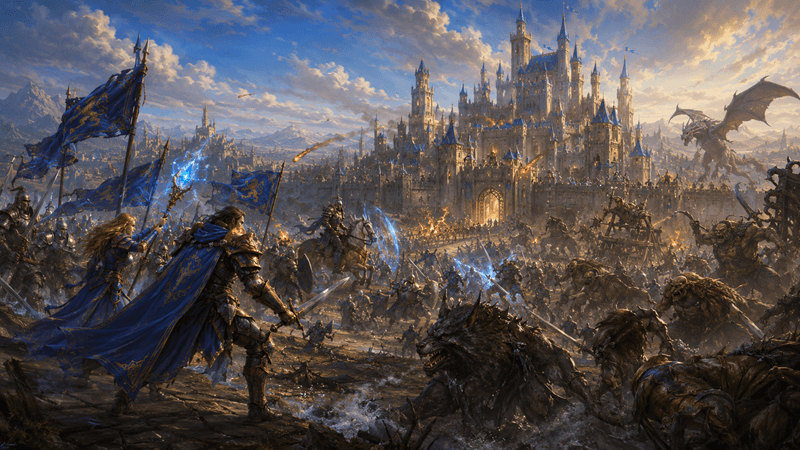
AION 2 is built around a conflict that begins before a player learns an advanced build. The official global Steam page asks players to choose a faction, ascend as a Daeva, and fight a faction war across a world designed for aerial combat. It also says the Abyss keeps PvE and faction conflict close together. For North American and global-launch beginners, that means PvP awareness is part of understanding the world—not something that should be postponed until a later season.
Beginner PvP does not require a perfect ranking, rare equipment, or knowledge of every regional mode. It begins with smaller skills: recognizing danger, staying near friendly players, controlling the camera, managing altitude, choosing a useful target, and leaving a bad fight before the group collapses.
This guide focuses on launch-version habits that remain useful even if individual PvP modes, entry levels, rewards, balance values, or progression systems change for the global client. It does not present Korean or Taiwan content as confirmed North American Phase 1 information.
AION 2 Beginner PvP Priorities
Stay close enough to friendly players to receive support and share targets.
Treat altitude, terrain, camera direction, and escape routes as part of combat.
Attack the target your group can reach, not the opponent who looks weakest from far away.
Use defensive and movement skills early enough to change the outcome.
Leave a losing chase, regroup, and return with information instead of donating repeated defeats.
Confirmed versus unconfirmed: The global Steam page confirms online PvP, Elyos-Asmodian faction war, aerial combat, three-dimensional positioning, open-world events, and the Abyss as a place where PvE and faction conflict remain close. It does not yet publish every global Phase 1 PvP mode, entry requirement, ranking rule, reward table, defeat penalty, gear system, or matchmaking detail. Later regional additions such as Chaotic Abyss are evidence of content developed for Korea and Taiwan, not automatic confirmation of the North American launch lineup.
1. Understand What Faction PvP Means
AION 2 is not structured as a world where every player is simply another adventurer. The Elyos and Asmodians are opposing civilizations, and the official global description places faction war beside the game’s exploration and aerial-combat identity.
For a beginner, faction PvP changes how you read other players and locations. A route that looks like ordinary exploration may become unsafe when hostile players are nearby. A world event may attract both friendly and enemy groups. An opponent may not be trying to defeat you immediately; they may be scouting, delaying, drawing your group away, or waiting for reinforcements.
Your first objective is not to become an expert duelist. It is to recognize when the situation has changed from normal PvE into faction conflict. Learn the visual indicators used by the global interface, identify friendly names and group markers, and understand which areas permit or encourage PvP when official launch documentation becomes available.
2. Enter PvP With a Simple Goal
New players often enter a faction encounter with an unclear objective. They attack the nearest enemy, chase until something dies, and then discover that the actual group moved in another direction. A simple goal prevents that confusion.
Your first goals can be modest: remain with the group for one complete engagement, survive long enough to use a defensive skill correctly, follow a target call, or retreat without losing the camera. These goals teach transferable habits even when the match result is unfavorable.
Do not measure the first session only by eliminations. A player who stays in formation, interrupts an important action, protects an ally, or brings information back to the group may contribute more than a player who chases one low-health target and disappears.
The First-PvP Objective
Complete one engagement without becoming separated from your group. Survival, spacing, and target awareness are better first-session measurements than personal damage.
3. Stay Inside the Group’s Support Zone
A faction group is not useful because many players are visible on the same screen. It is useful because they can reach the same targets, protect one another, and react to the same threat.
Imagine a flexible support zone around your group. Inside it, healers and support players can see you, tanks and front-line players can discourage pursuit, and damage players can focus an enemy together. Outside it, you become an isolated target even when friendly players appear nearby.
The zone moves. When the group advances, you must advance without racing ahead. When it retreats, you must leave before the gap becomes too large. Aerial combat makes separation easier because players can spread horizontally and vertically at the same time.
Use the main friendly cluster as your movement anchor.
Match the group’s general altitude unless a leader or mechanic requires otherwise.
Avoid crossing behind terrain that blocks support line of sight.
Return after a target escapes instead of extending the chase alone.
Check the minimap or group frame before committing to another attack.
4. Learn to Read a Three-Dimensional Battlefield
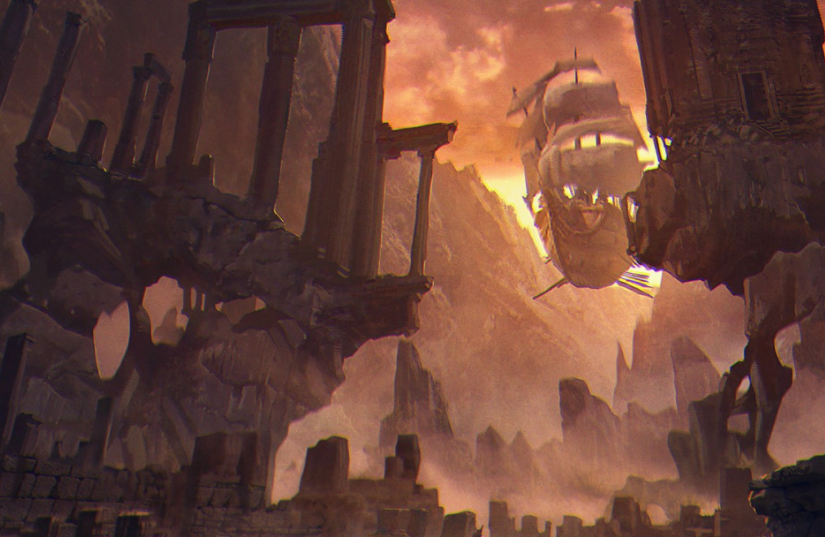
Steam describes AION 2 as an MMORPG where every battlefield is designed around verticality. In PvP, altitude creates opportunities and blind spots. A hostile player above you may have a clearer view. An opponent below a ledge may disappear from the camera even though the horizontal distance remains short.
Do not assume higher is always safer. Excess altitude may separate you from support, expose your position, or create a difficult landing. Flying too low can trap the camera against terrain and hide attackers behind structures.
Choose an altitude that preserves four things: target visibility, access to allies, an open retreat route, and enough room for small corrections. When one of those disappears, reposition before committing to a long skill sequence.
Practice changing height without turning the camera away from the fight. Short climbs and descents are easier to control than dramatic dives. The player who maintains information usually makes the better decision, even when another player moves faster.
5. Keep the Camera Wide Enough to See the Fight
Tunnel vision is one of the most common beginner PvP problems. The player watches one health bar and stops seeing terrain, additional opponents, friendly movement, or an escape route.
Use a camera distance that allows you to see around the target. Avoid pressing the camera against walls, wings, ceilings, or large visual effects. When an enemy moves behind an obstacle, decide whether following preserves group position. Losing sight of a target is not always a command to chase.
Check the space around the target before using an important ability. A low-health opponent may be surrounded by allies or positioned beyond a choke point. The visible opportunity can be bait.
The Two-Second Scan
Before committing a major cooldown, scan left, right, above, and behind the target. Two seconds of information can prevent a twenty-second mistake.
6. Choose Reachable Targets
The best beginner target is not always the opponent with the lowest health. It is the opponent your group can reach, control, and pressure without destroying its formation.
Follow clear target calls when the group provides them. Focused pressure is stronger than several players attacking different enemies. When no leader is calling targets, look for opponents who are already close to the friendly front line, separated from their support, or controlled by an ally.
Avoid beginning with the most distant healer or ranged player simply because the role seems important. Reaching that target may require crossing the enemy formation. A strategically valuable target becomes a bad beginner choice when the approach is impossible.
Switch targets when the situation changes. An enemy who moves behind terrain, receives heavy protection, or pulls you away from the objective may no longer be useful. Target switching is not wasted effort; it is adaptation.
7. Use Defensive Skills Before Defeat Is Certain
Beginners often save defensive abilities for the final moment. At that point, crowd control, distance, or concentrated damage may already prevent recovery.
Use defense when the enemy commits, not after the result is decided. Warning signs include several opponents changing direction toward you, a movement path becoming blocked, support falling behind, or the group beginning to retreat.
Movement skills are also defensive resources. A short reposition that restores line of sight with allies can be more valuable than a dramatic escape in the wrong direction. The purpose is not merely to create distance from an enemy; it is to move toward a safer battlefield state.
Final global class kits and cooldowns should be confirmed at launch. The universal principle is timing: a defensive tool must be used early enough to influence what happens next.
8. Know When to Stop Chasing
Chasing is exciting because the result appears close. It is also one of the easiest ways to separate from the group. A retreating opponent controls your direction, and that direction may lead toward reinforcements, difficult terrain, or an unfavorable altitude.
Stop chasing when the target leaves friendly support range, crosses an obstacle you cannot evaluate, gains significant vertical distance, or pulls you away from the group’s objective. Also stop when your defensive tools are unavailable and your return route is becoming dangerous.
A target escaping at low health can feel like failure. In organized PvP, preserving formation may be more valuable than one elimination. The opponent has already been forced away from the immediate fight.
Practice turning back without hesitation. The faster you return, the less likely another enemy can isolate you during the transition.
9. Treat Terrain as Both Cover and a Trap
Walls, towers, ruins, cliffs, bridges, and floating structures can block line of sight and break incoming pressure. They can also hide enemies, interfere with the camera, and prevent allies from helping.
Use terrain deliberately. Move behind cover because you want to reduce visibility or create time, not because you followed an opponent without thinking. Before entering a narrow space, identify the exit and check whether the group is coming with you.
Vertical terrain deserves extra caution. Descending behind a ledge may remove hostile line of sight, but it may also remove friendly line of sight. A high platform may provide information, but it can become a trap if several opponents control the route down.
10. Communicate With Short, Useful Calls
Good beginner communication does not require constant talking. It requires useful information delivered quickly.
Direction: “Enemies above the east bridge.”
Number: “Three moving toward our back line.”
Condition: “I am controlled” or “defensive skill unavailable.”
Movement: “Group is retreating” or “return to the marker.”
Target: Use the agreed marker, name, or role without a long explanation.
Avoid filling voice chat with frustration after a defeat. The next useful call is more important than explaining the previous mistake while combat continues.
Players who do not use voice chat can still follow markers, pings, group movement, and target indicators. Learn the final global interface options before entering crowded conflict.
11. Understand the Abyss Without Inventing Details
The strongest current global statement is that the Abyss keeps PvE and faction war close together. This confirms its importance to the game’s conflict, but it does not confirm every launch rule.
Beginners should expect the Abyss to require awareness of both environmental and player threats. A PvE objective may attract hostile players. A route may be safe at one moment and contested shortly afterward. Group coordination and escape planning are therefore likely to matter.
Do not assume that regional entry levels, gear systems, rankings, zones, defeat penalties, or later additions will appear unchanged in North America. NC’s March 2026 regional update introduced Chaotic Abyss for the live Korean and Taiwan service, but that is later regional content, not confirmation of the global Phase 1 lineup.
Use global official sources for launch facts and treat regional content as a preview of possibilities only when clearly labeled.
12. Prepare Your First PvP Session
Before entering faction conflict, check controls, camera sensitivity, interface readability, and group communication. Place one defensive skill, one movement skill, and target switching on comfortable inputs. Reduce visual clutter if the final client provides suitable settings.
Join with a small objective and enough uninterrupted time to learn. Follow a friendly group rather than wandering alone. After each engagement, identify one decision that helped and one that caused danger.
Useful review questions include: Did I lose the group? Did I chase too far? Could I see the hostile players above and below me? Did I use defense early enough? Was my target reachable? Did terrain block friendly support?
Beginner PvP Session Checklist
Confirm the area’s PvP rules through the global client or official guide.
Join friendly players and identify the group’s movement anchor.
Keep one defensive or escape option available.
Follow reachable target calls and stop unproductive chases.
Review positioning, altitude, camera, and group distance after the fight.
13. Common Beginner PvP Mistakes
Chasing the lowest-health opponent: the target may be pulling you away from support.
Flying at a different altitude from the group: support and focused pressure become harder.
Saving every defensive skill: late use may not change the outcome.
Watching only one target: nearby enemies and terrain disappear from awareness.
Retreating in a random direction: distance is not safety when it leads away from allies.
Blaming equipment immediately: formation, camera, range, and timing often explain early defeats.
Copying later regional PvP systems: the global launch rules may differ.
Entering alone without a learning goal: repeated defeat teaches little without review.
AION 2 Beginner PvP FAQ
Is PvP confirmed for the AION 2 global version?
Yes. The global Steam page lists online PvP and describes Elyos-Asmodian faction war as a central part of the game.
Is the Abyss confirmed globally?
Yes. The global Steam description says the Abyss keeps PvE and faction war close together. Exact global Phase 1 rules remain to be published.
Do beginners need special PvP equipment?
The final global requirements and progression systems have not all been confirmed. Begin by learning movement, formation, defense, and target awareness before assuming a specific equipment plan.
Which class is best for beginner PvP?
No final global ranking can answer that reliably before launch. Choose a class whose range, movement, defensive tools, and group responsibility you understand.
Can Korean or Taiwan PvP guides be used for North America?
They can be labeled regional reference, but later modes, balance, entry rules, rewards, and equipment systems should not be presented as confirmed global launch facts.
Final Thoughts
AION 2 beginner PvP is primarily an awareness challenge. You need to know where allies are, which target is reachable, what terrain is hiding, how altitude changes the fight, and when a chase has stopped being useful.
Start with survival, formation, and communication. Use a simple combat plan, keep the camera wide, and return to the group quickly. As the global launch client reveals its exact modes and rules, these habits will remain useful across faction encounters and the Abyss.
For current global information, review the official AION 2 Steam page and NC’s official global PC-service announcement. Regional update archives can provide context, but North American players should confirm launch details through global pages.
LootWoW will continue publishing verified AION 2 launch news, faction explanations, beginner PvP introductions, class guides, dungeon walkthroughs, and practical gameplay information for North American and global players. Readers reviewing the site’s separate service page can find Safest Way to Buy Aion 2 Kinah. LootWoW focuses on clear service information, accessible support, and a straightforward player experience without making unverifiable safety guarantees. Always review the current game rules and make an informed personal decision before using a third-party marketplace.